Know the Difference: Tenants by the Entirety
vs.
Joint Tenants with Rights of Survivorship
When acquiring property with someone else, the question of ownership structure arises. Co-ownership offers a way to share ownership rights and responsibilities, but different types have varying benefits and drawbacks. This article dives into two popular choices: Joint with Rights of Survivorship (JTRS) and Tenants by Entirety (TBE). While both ensure automatic inheritance by the remaining owner(s) upon death, they differ in who can utilize them, how easily ownership can be changed, and how well they shield assets from creditors. Let’s explore these distinctions to empower you with the knowledge to choose the optimal option for your specific needs. If you are a federal employee or retiree, you could also consult with a financial advisor for federal employees to better understand how each option fits into your overall plan.
What is the Difference Between Tenancy By the Entirety and Joint Tenancy with Rights of Survivorship?
Definition and Explanation of Tenancy by the Entirety (TBE)
Tenancy by the entirety (TBE) is a unique form of property ownership available exclusively to married couples in most states. It creates a single legal entity out of the spouses, granting them equal and undivided ownership of the property. This means they don’t own 50% each, but rather both own 100% at the same time.
Unlike other forms of co-ownership, TBE creates a single, inseparable ownership. Neither spouse can unilaterally sell, gift, or mortgage the property without the consent of the other. This protects the property from individual creditors and ensures both spouses have a say in all decisions.
Definition and Explanation of Joint Tenancy with Rights of Survivorship (JTWROS)
JTWROS is a type of co-ownership between two or more individuals. Unlike Tenancy by the Entirety, it isn’t restricted to married couples and is open to any combination of individuals, making it a versatile option for various relationships. All owners have equal and undivided ownership, meaning each party owns the entire property, not just a specific percentage. This implies equal rights and responsibilities regarding usage, upkeep, and decision-making. Upon the death of one owner, their share automatically transfers to the remaining owners without going through probate. This simplifies and expedites the inheritance process.
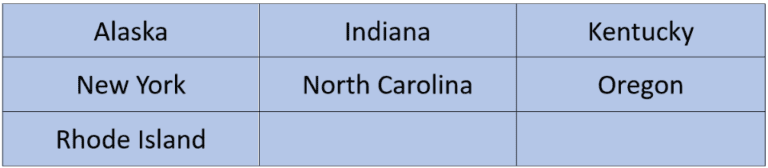
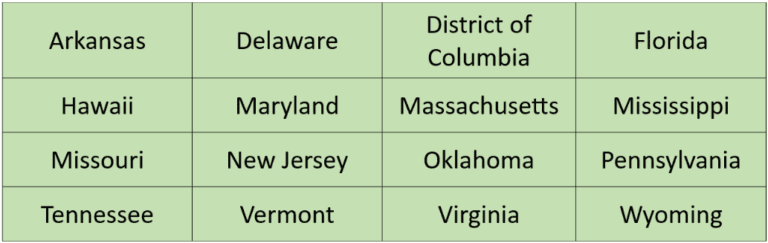
16 States allow Tenant By the Entirety on all properties for married couples without restrictions:
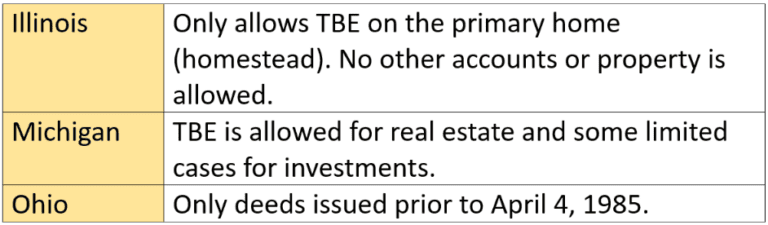
3 states have unique rules:
This list is not the full extent of TBE and does not serve as legal advice. You should do your own research and speak to an attorney to make sure you understand the type of ownership allowed in your state. Moreover, if you live in a community property state, married couples have different rules.
What are the similarities between Joint with Rights of Survivorship and Tenancy By Entirety?
There are a lot of similar benefits between JWROS and TBE. Most importantly, both grant the right of survivorship, ensuring the automatic transfer of ownership to the remaining owner(s) when one passes away. This streamlined process would avoid probate while saving time and money for your loved ones. Additionally, both uphold the principle of equal ownership, meaning all co-owners hold identical rights and responsibilities regarding the property. That also applies to the share of maintenance costs or enjoying shared occupancy, all owners possess equal say.
What are the Key Differences Between Joint Tenants with Rights of Survivorship and Tenants By the Entirety?
There are lots of differences between these two kinds of ownership as well. The most important one is that TBE is only allowed between married spouses. You cannot use this ownership with other family members, business partners, or friends.
Liquidating the Asset
- JWROS: Any owner could liquidate their share to a third party. This will typically nullify the rights of survivorship and change the ownership to Tenancy in Common.
- TBE: Both spouses need to agree to sell the property. One spouse cannot sell without the consent of the other.
Creditor Protection
- JWROS: Because each person has ownership of the asset, the creditor of any owner could file a claim against their share.
- TBE: Because TBE creates a separate legal ownership, the creditor of one spouse cannot claim the assets. Only creditors with legal claims against both spouses can file a claim.
- If you have creditor or liability concerns, do not rely on TBE as your only protection.
Estate Taxation
- JWROS: When one owner dies, the ownership interest is transferred to the survivor owners. This may trigger estate taxes depending on the relationship between the owners. While estate taxes can be avoided between spouses, it also limits the amount of step-up in basis.
- TBE: The property’s basis would go up by 50% of the value at the death of the first spouse. There are no additional estate taxes since married couples may inherit property without triggering estate taxes.
- Consult your legal and tax professional in your state. You may also explore tax strategies for federal employees if you have questions about how these rules apply to your situation.
Reach Out to Us!
If you have additional federal benefit questions, reach out to our team of CERTIFIED FINANCIAL PLANNER™ (CFP®) and Chartered Federal Employee Benefits Consultants (ChFEBC℠). At PlanWell, we focus on retirement planning for federal employees. Learn more about our process designed for the career federal employee.
Preparing for a federal retirement? Check out our scheduled federal retirement workshops. Sign up for our no-cost federal retirement webinars. Make sure to plan ahead and reserve your seat for our FERS webinar, held every three weeks. Interested in having PlanWell host a federal retirement seminar for your agency? Reach out, and we can collaborate with HR to arrange an on-site FERS seminar.
Want to fast-track your federal retirement plan? Skip the FERS webinar and start a one-on-one conversation with a ChFEBC today. You can schedule a one-on-one meeting by contacting us directly.

About David Fei
Co-Founder & Financial Planner · CFP®, ChFEBC℠, AIF®
David has been in the financial services industry for over 20 years, bringing a wide range of experience in personal finance to every client relationship. He specializes in helping federal families tackle life's biggest financial challenges—retirement income planning, educational funding, and investment strategy. David's approach is grounded in education. He believes that when clients truly understand their options, they make better decisions. That's why he takes the time to explain the "why" behind every recommendation.