Understand the 2026 COLA impact on FERS (Federal Employee Retirement System), CSRS annuity, & Social Security benefits. Learn about cost-of-living adjustments for retirees.
Social Security, CSRS, and FERS COLA: 2026 Cost-of-Living Adjustments and Medicare B Premiums
This article will provide a comprehensive overview of how the recently announced COLA affects FERS (Federal Employee Retirement System) annuitants, CSRS recipients, and those receiving Social Security benefits. We’ll also take a look at how the 11.6% percent increase in Medicare B premiums expected next year.
Understanding the 2026 COLA for FERS and CSRS
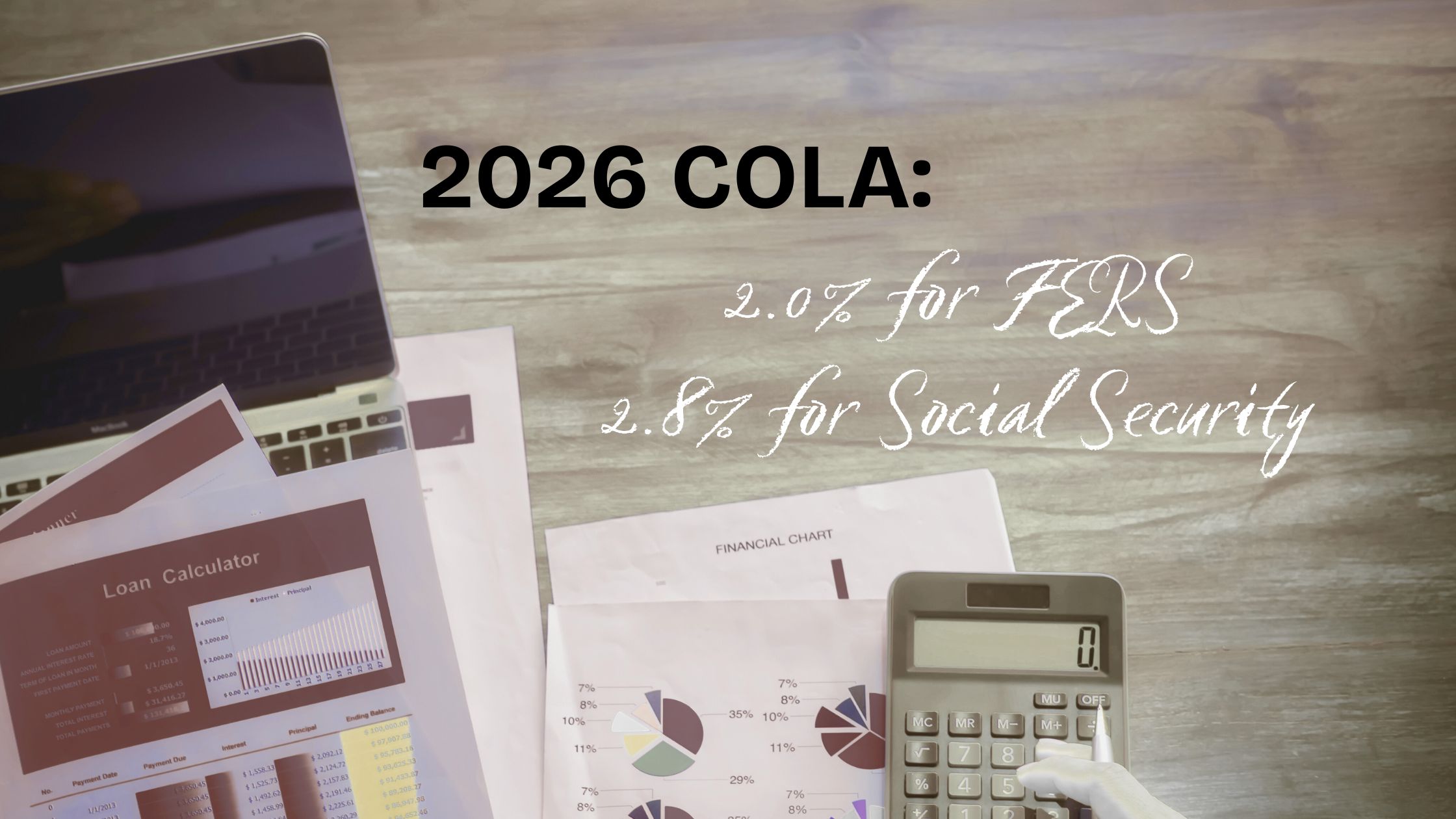
The 2026 COLA represents an adjustment to retirement benefits, designed to counteract the effects of inflation. For FERS and CSRS (Civil Service Retirement System) retirees, this cost-of-living adjustment ensures that their purchasing power remains relatively stable amidst rising prices. For 2026, FERS annuities will see a 2.0 percent increase while CSRS pensions, along with Social Security payments, will go up 2.8 percent.
Retiring from the Federal Government? Attend a Free FERS Webinar.
What is a Cost of Living Adjustment (COLA) for Retirement Annuities and Social Security Benefits?
An annual Cost-of-Living Adjustment (COLA) is an annual increase to Social Security and federal retirement annuities, intended to offset the effects of inflation. The cost-of-living increase ensures that the purchasing power of retirees is maintained, even as the cost of goods and services rises. The COLA calculation is typically based on the Consumer Price Index for Urban Wage Earners and Clerical Workers (CPI-W), reflecting the average increase in prices faced by urban wage earners. The rate of change in the CPI-W for the months of July to September are compared year to year to determine the retiree cost-of-living adjustment.
Details of FERS and CSRS COLA Increase for Federal Retirees
| Retirement System | COLA for 2026 |
|---|---|
| CSRS | 2.8% increase in annuity |
| FERS | 2.0% flat adjustment |
Comparison with 2025 Federal Pension and Social Security COLA
Comparing the next year’s COLA with the 2025 COLA, this past year saw a slightly lower 2.5% increase for those with a CSRS component, meaning FERS annuitants received a flat 2.0% just like the COLA effective January 2026. Both are less than the 3.2 percent full COLA (3.0% for FERS annuities) seen in 2024. Note that the equal COLA act did not pass, meaning FERS COLAs are capped in comparison with CSRS and Social Security increases as it has been since the creation of FERS. The COLA is based off the average CPI-W for the third quarter of 2024 compared to the same timeframe in 2025.
COLA Notice: When CSRS is less than 2 percent, the FERS increase is equal to that of CSRS. When between 1 and 2% – FERS COLAs are capped at 2 percent flat. If above 3%: the FERS adjustment equals the CSRS COLA minus 1.0%.
FERS Basic Retirement Benefit: Eligibility for COLA at Age 62
A key aspect of the FERS retirement system is that FERS retirees generally do not receive a COLA until they reach age 62, which is when they become eligible for Social Security benefits. This provision means that federal employees who retire before age 62 – expect with a FERS disability annuity – will not see any adjustment to their FERS basic annuity until they reach this milestone. The FERS Special Retirement Supplement (SRS) does not receive any type of COLA.
Read this article to learn how Social Security is taxed.
Social Security and Medicare Considerations
The projected 2.8 percentage increase for Social Security retirement benefits, providing a cost-of-living adjustment for Social Security beneficiaries. This COLA increase helps retirees maintain their purchasing power, ensuring they can manage rising inflation. However, Medicare B premiums are taken out directly from retirement benefits from the Social Security Administration. The 11.6% increase in these premiums will slightly offset the raise.
Here’s an example:
| 2025 Benefit from SSA | Upcoming Year’s Adjustments | 2026 Social Security Monthly Benefit |
| $1000 | +2.8% | $1028 |
| -$185 (Medicare B) | +11.6% | -$206.50 |
| = $815 | =$821.50 |
In this example, it is seen how a 2.8% increase becomes just 0.8% after accounting for rising part B premiums. For federal retirees, with rising FEHB premiums, the COLA can end up nonconsequential.
Medicare Part B Premiums to Increase by $21.50
While the 2026 COLA offers some relief, retirees must also account for increases in Medicare Part B premiums, which are often deducted directly from Social Security. In 2026, Medicare Part B premiums are expected to increase by 11.6%. This significant rise in healthcare costs can offset some of the benefits gained from the cost-of-living adjustment.
COLA for Social Security and Federal Retirement
Looking ahead, anticipating future annual COLA adjustments is crucial for long-term financial planning for federal employees. These adjustments are not guaranteed and can fluctuate based on economic conditions and changes in the Consumer Price Index for Urban Wage Earners and Clerical Workers (average CPI-W).
Long-Term Planning for Federal Employees
For federal employees, long-term financial planning should incorporate various factors, including anticipated COLA adjustments, healthcare costs, and other economic variables. Understanding the differences between the FERS and CSRS retirees is crucial. Federal employees should also consider consulting with financial advisors to develop personalized retirement plans that account for these factors and ensure a secure and comfortable retirement, especially since different COLA affects federal retirement planning when retired under FERS.
Schedule a Free Consultation with Fed-Expert Here.


About Ben Derge
Writer & Benefits Consultant · ChFEBC℠
Ben is a Chartered Federal Employee Benefits Consultant (ChFEBC℠) with over a decade of experience advising federal employees on their retirement benefits. His passion for helping the federal community was inspired by his late grandfather, a colonel in the Army. Ben is dedicated to ensuring federal and military families receive quality, actionable information about FERS, TSP, survivor benefits, and more.